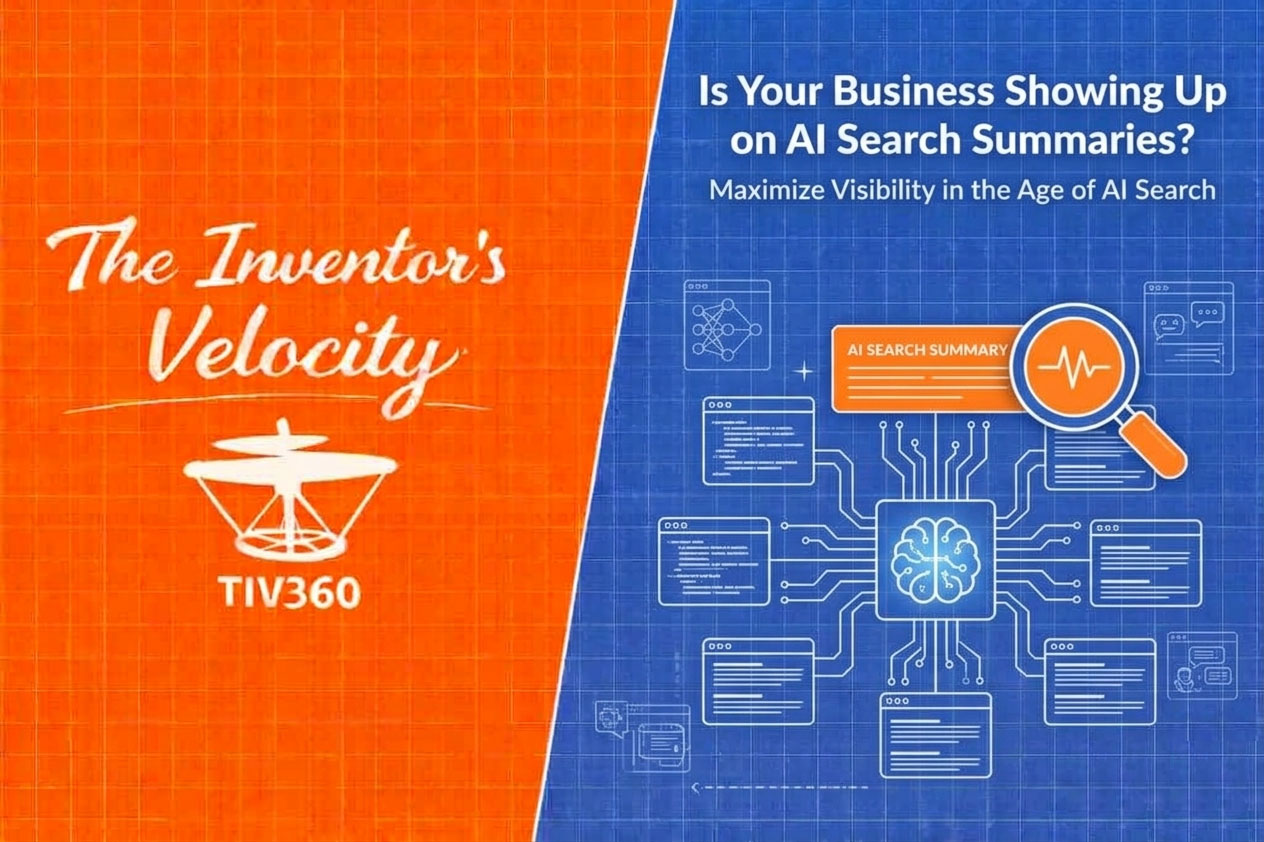
Is Your Business Showing Up on AI Search Summaries?
When someone searches for what you offer in ChatGPT, Google Gemini, or Google Search, does your business come up? The answer to that question is quietly deciding whether you win new customers or get left out entirely.
The Way People Search Has Changed for Good
Remember the old Google results page? Blue links, a couple of ads across the top, and ten results ranked by relevance. You had to scroll, click, compare, and figure it out yourself. That model worked for two decades — but people got tired of it.
Today, search engines and AI assistants hand you the answer directly. Google bundles an AI-generated summary right at the top of results. ChatGPT gives you a full conversational response. Perplexity cites its sources in real time. The user never has to dig through a page of ads.
“Answers — not links — are becoming the default way information is consumed. The distance between ‘search’ and ‘assistant’ continues to shrink.”
That is exactly the environment your small business is operating in right now. If an AI summary describes your competitor when a potential customer asks for what you sell, your competitor wins that lead — without ever showing up in a traditional ranking.
The Numbers Are Not Small
This is not a trend to watch from the sidelines. The scale of AI-powered search is already enormous, and it is accelerating every quarter.
Visitors arriving from AI search platforms convert at dramatically higher rates — one study found they generated 12.1% of sign-ups while accounting for just 0.5% of total traffic. The customers AI sends you are already convinced.
Your AI Summary Is Your First Impression
When someone searches “best plumber in Rochester MN” or “web designer near Santa Rosa” and an AI tool generates a summary response, that summary is the first — and often only — thing the person reads. Research on user behavior shows that people read AI-generated answers with more confidence and less friction than traditional results. Trust forms before a single click.
If your business is described accurately and positively in those summaries, you get the call. If you are absent, described vaguely, or outcompeted by a more established brand, that customer moves on.
The old game was about keyword rankings. The new game is about authority signals — reviews, citations, consistent NAP data, structured content, and a web presence strong enough that AI tools trust you as a source. A well-optimized Google Business Profile, a clear and content-rich website, and third-party mentions across reputable directories all contribute to whether AI platforms include your business in their responses.
The good news: local businesses that build genuine authority in their niche and geography are well-positioned to be cited. AI tools are actively looking for credible, specific, well-sourced answers — and a legitimate local business with a solid online presence can absolutely compete.

Modern Strategies to Win AI Visibility
Getting into AI search summaries requires a different mindset than old-school SEO. Here are the strategies that actually move the needle in today’s environment.
-
01Build Real Authority Through Third-Party Citations
Brands are 6.5x more likely to be cited in AI responses through third-party sources than through their own domain. That means earning mentions in local directories, industry publications, news sites, and review platforms like Google, Yelp, and Bing Places is not optional — it is the core of your AI SEO strategy. A strong profile everywhere your customers might look builds the signal that AI tools use to trust you as a real, credible business.
-
02Optimize Your Google Business Profile
Your Google Business Profile feeds directly into Google AI Overviews and Gemini responses. Accurate business name, address, phone number, hours, categories, photos, and regular posts all contribute. Prompts with local intent trigger an AI web search 59% of the time — and a fully optimized GBP is often the source those AI tools pull from first.
-
03Create Clear, Structured Content That Answers Real Questions
AI tools favor content that is specific, factual, and freshly updated. Nearly half of all AI citations pull from the first 30% of an article — your opening paragraphs matter more than ever. Write clear service pages that answer the exact questions your customers are asking. Use plain headers, direct answers, and definite language. Vague content does not get cited.
-
04Pursue Consistent Reviews — and Respond to Them
Reviews are a trust signal for AI systems, not just human readers. A business with dozens of recent, authentic reviews and owner responses demonstrates ongoing activity and credibility. Make asking for reviews a standard part of your customer workflow. Negative reviews addressed professionally can actually strengthen your profile by showing responsiveness.
-
05Invest in Video — YouTube Is the Top AI Citation Source
YouTube accounts for roughly 18-23% of citations in Google AI Overviews — making it the single most cited platform of any kind. Even simple, honest videos about your services, your team, and your work can create AI-visible content that no amount of text SEO alone can replicate. A short “meet the business” video is a low-cost, high-leverage move for a local company.
-
06Diversify Your Traffic — Do Not Depend on Google Alone
With over 58% of searches ending without a click and AI Mode sending almost no traffic to external sites, relying entirely on organic Google rankings is a shrinking strategy. Build an email list. Grow your social presence. Pursue local press coverage. Launch a newsletter. Own your audience directly so that algorithm shifts cannot cut off your customer pipeline overnight.
The Wild AI SEO World Is Not Going Anywhere
This is not a temporary disruption. Google is integrating AI summaries deeper into every search. ChatGPT is growing toward Google-scale query volume. New AI-native browsers are shipping with built-in assistants that answer questions before the user ever reaches a search results page.
Small businesses that adapt early will have a meaningful head start. The companies that build genuine authority, publish real content, earn legitimate reviews, and maintain an accurate web presence across platforms are the ones that AI tools will trust — and recommend.
You do not need to become an AI expert. You need a clear, honest digital presence and a strategy built for how search actually works today. That is exactly what The Inventor’s Velocity helps small businesses build.